How to Lower Pool pH This Spring and Keep Your Pool Safe to Swim
How to lower pool pH this spring starts with testing first, making small adjustments, and letting the water circulate so your pool stays clear, comfortable, and safe for swimming. If your pH is too high, chlorine will not work as well, water can turn cloudy, and swimmers may feel eye or skin irritation. This guide walks you through an easy way to fix it, prevent it from coming back, and get your pool ready for the season.
If you are still opening your pool, start here: Pool Opening Service in St. Louis. If you want a step-by-step homeowner list, use Spring Pool Opening Checklist.
What is pool pH, and what range is safe for swimming?
Pool pH is a number that shows how “acidic” or “basic” your pool water is. Most pools feel best and stay safest when pH is between 7.2 and 7.6.
When pH is too high, you may notice:
When pH is too low, water can feel harsh and may damage pool parts over time.
For swim-safety basics and water care best practices, see: CDC: Home Pool & Hot Tub Water Treatment and Testing.
How to lower pool pH this spring safely (step-by-step)
The safest way to lower pH is to go slow: test → add a small amount → circulate → retest.
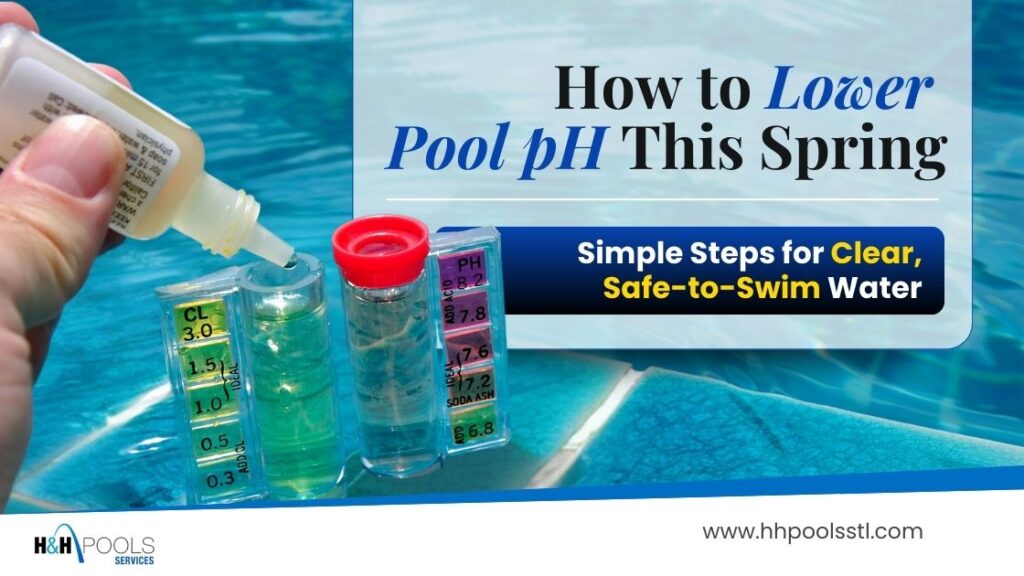
Step 1: Test first
Before adding anything, test your pool water. If possible, test:
Write your numbers down. This prevents “chemical guessing,” which is how many pools swing from one problem to another.
Step 2: Use the right product
Most stores sell “pH Down” or “pH Decreaser.” Follow the label instructions for your pool size.
Basic safety tips:
If you want a simple chemistry reference that explains common targets, here is a helpful overview: Pentair: Water Chemistry Education.
Step 3: Add a small amount while the pump is running
Turn your pump on. Add the product slowly (per label directions), and give it time to mix.
Important: Do not dump a large amount in all at once. That is how pH drops too far and creates new problems.
Step 4: Circulate, then retest
Let the pump run for a few hours, then retest pH. If it is still high, repeat with another small dose.
This slow approach is the best way to how to lower pool pH this spring without stressing your pool surfaces or equipment.
Pool chemical balancing in spring (what matters besides pH)
Spring is when pool water changes quickly because of rain, pollen, warmer temps, and heavy early-season use. That is why pool chemical balancing matters, not just pH.
Here is the simple way to think about it:
If your pool keeps “fighting back” and pH rises again and again, your water may be out of balance. Doing pool chemical balancing early in spring can save you money on extra chemicals later. If your water is cloudy or keeps turning green, pool chemical balancing is often the missing step.
If you want help keeping water stable all season, see Pool Maintenance in St. Louis.
Pool maintenance tips that prevent high pH and cloudy water
A clean pool is easier to balance. Most spring problems come from debris and poor circulation.
Here are practical pool maintenance tips that help keep pH stable:
These pool maintenance tips are especially important in spring because pollen and new growth can quickly cloud water. If you want fewer problems all season, start with strong pool maintenance tips during the first few weeks after opening.
For more seasonal guidance, read Spring Pool Maintenance Tips.
When to hire a pool cleaning service
Sometimes the fastest fix is getting help, especially if the pool is cloudy, green, or you are short on time. A pool cleaning service can handle the messy work and help stabilize the water correctly.
You may want a pool cleaning service if:
A good pool cleaning service visit should include:
Call a pro if you notice:
If you want to avoid common mistakes that cause cloudy water, see Pool Cleaning Mistakes.
Final pool openings in spring: avoid “green water week”
If you are doing a late or “final” pool opening, you are not alone. Late openings often start with heavier debris load and faster algae risk.
Here is how to avoid that first-week frustration:
This is also where a pool maintenance service can be a huge help, because the first week sets the tone for the whole season.
If you suspect something bigger than chemistry (like circulation or equipment trouble), check Pool Troubleshooting Tips in St. Louis.
A spring swim-ready checklist
Use this quick checklist to keep the water safe and clear:
- 1
Test pH and alkalinity
- 2
If pH is high, lower it slowly and retest
- 3
Brush and skim consistently for the first 2–3 weeks
- 4
Keep the pump running enough to circulate properly
- 5
Stay consistent (spring water changes fast)
If your pool still will not clear, it may be time for a pool maintenance service to troubleshoot the cause (filter issues, circulation problems, heavy debris, or chemistry that keeps drifting). A reliable pool maintenance service helps prevent wasted chemicals and repeat problems. Many homeowners use a pool maintenance service early in spring to get stable water, then maintain it with simple weekly habits.
If you are in St. Louis or nearby (Chesterfield, Kirkwood, St. Charles, Webster Groves, Wentzville, and surrounding areas), H&H Pools can help with spring cleanups, final openings, and clear-water maintenance. If your pool is cloudy, green, or your chemistry keeps drifting, we will help you get it clear and comfortable.
- See what homeowners say: St. Louis Pool Service Reviews
- Reach out here: Contact H&H Pools