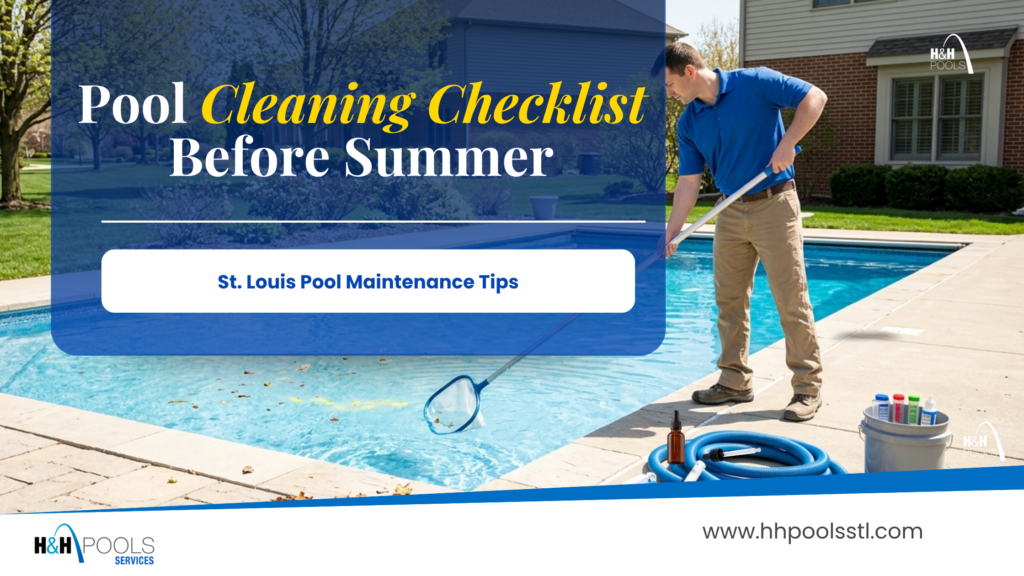
Pool Cleaning Checklist for St. Louis Homeowners Before Summer
A pool cleaning checklist helps St. Louis homeowners prepare their pool before summer by covering the most important cleaning and maintenance steps: skimming, vacuuming, brushing, filter care, water testing, water level checks, and knowing when to call for professional help. Following this checklist can help prevent cloudy water, algae, weak water flow, and last-minute pool problems.
Why Do St. Louis Homeowners Need a Pool Cleaning Checklist Before Summer?
A pool cleaning checklist helps homeowners know what to clean, what to check, and what problems to watch for before pool season gets busy. It gives you a clear plan instead of guessing what your pool needs.
In St. Louis, spring rain, pollen, leaves, and changing temperatures can affect your pool before summer begins. If small cleaning tasks are skipped, the pool can quickly turn cloudy, dirty, or harder to use.
If you want to avoid the most common cleaning problems, start by reading H&H Pools’ guide on common pool cleaning mistakes homeowners should avoid. That article explains how skipped skimming, poor filter care, unbalanced water, and wrong water levels can create bigger pool issues.
A good checklist can help prevent:
Pool Maintenance Checklist: What Should You Clean First?
A pool maintenance checklist should start with the surface of the pool because leaves, bugs, grass, and pollen usually collect there first. Removing debris early helps keep it from sinking to the bottom.
Start by skimming the pool surface. Then empty the skimmer baskets so water can move properly through the pool system.
Add these tasks to your pool maintenance checklist:
This simple first step can make the rest of your pool cleaning easier. It also helps your pool look cleaner right away.
For homeowners who want help staying consistent, H&H Pools offers pool maintenance services in St. Louis for seasonal upkeep, cleaning support, and ongoing pool care.
Swimming Pool Cleaning Checklist: How Should You Vacuum the Pool?
A swimming pool cleaning checklist should include vacuuming because dirt, sand, leaves, and small debris often settle on the pool floor. Even if the surface looks clean, the bottom of the pool may still need attention.
Vacuum slowly so you can pick up more dirt. Rushing can stir debris back into the water instead of removing it.
Add these vacuuming steps to your swimming pool cleaning checklist:
Vacuuming before summer helps the pool feel cleaner and more comfortable when your family starts using it more often.
Pool Maintenance Checklist: Why Should You Brush Walls, Steps, and Corners?
Your pool maintenance checklist should include brushing because dirt and algae can stick to walls, steps, corners, and shaded areas. These spots are easy to miss if you only skim and vacuum.
Brushing loosens buildup so it can be removed more easily. It also helps prevent slimy areas and early algae growth.
Add these brushing tasks to your pool maintenance checklist:
Brushing is one of the most commonly skipped pool cleaning steps. But before summer, it is one of the most helpful ways to keep the pool ready for regular use.
Swimming Pool Cleaning Checklist: How Do You Check the Filter?
A swimming pool cleaning checklist is not complete without checking the filter. The filter helps remove dirt and small particles from the water.
If the filter is dirty or clogged, the pool may stay cloudy even after skimming, brushing, and vacuuming. Filter care is also part of regular pool upkeep because weak water flow can make the pool harder to keep clean.
Add these filter checks to your swimming pool cleaning checklist:
A clean filter helps your pool stay clearer during the busiest part of summer.
If your filter, pump, or other equipment is not working the way it should, H&H Pools can help with pool repair before summer so the problem does not slow down your pool season.
Pool Cleaning Service: When Should You Test and Balance the Water?
A pool cleaning service can help test and balance your pool water before summer, but homeowners should still know why this step matters. Clear water is not always properly balanced water.
Poor water balance can lead to cloudy water, algae, eye irritation, skin discomfort, and damage to pool surfaces or equipment. The CDC recommends regular chlorine and pH testing because pH affects swimmer comfort, pool parts, and how well chlorine works.
Before summer, check for:
A professional pool cleaning service is helpful if the water stays cloudy, turns green, or does not clear up after basic cleaning.
For more homeowner water care guidance, you can also review the CDC’s page on home pool and hot tub water treatment and testing.
Pool Cleaning Service: Why Is the Water Level Important?
A pool cleaning service will also check the water level because the pool needs the right amount of water to work properly. If the water is too low, the skimmer may not pull in water correctly. If the water is too high, debris may not skim off the surface well.
Use this water level checklist:
A fast drop in water level may point to a leak or another issue that should be checked before summer gets busy.
If your pool keeps losing water, H&H Pools offers pool leak detection service in St. Louis to help find the source of the problem before it creates more damage.
When Should You Call a Pool Cleaning Service?
You should call a pool cleaning service when regular cleaning is not fixing the problem. Some pool issues need more than skimming, brushing, vacuuming, and water testing.
Call for help if:
Poor installation can lead to problems like leaks or uneven water flow. If you already suspect a problem with water loss, it may be worth learning more about pool leak detection
Getting help early can make the start of summer smoother. It can also help prevent bigger pool problems later.
If your pool has not been opened yet, H&H Pools also provides professional pool opening service that includes cover removal, water testing, and equipment inspection for the season.
What Is the Complete Pool Cleaning Checklist Before Summer?
A complete pool cleaning checklist should cover the surface, floor, walls, filter, water, water level, and basic equipment signs. This gives you a full view of your pool before summer begins.
Use this checklist:
- 1
Skim the pool surface.
- 2
Empty skimmer baskets.
- 3
Remove leaves and debris around the pool.
- 4
Brush walls, steps, benches, and corners.
- 5
Vacuum the pool floor.
- 6
Check the filter.
- 7
Clean or rinse the filter if needed.
- 8
Test the water.
- 9
Balance the water.
- 10
Check the water level.
- 11
Look for cloudy or green water.
- 12
Check for algae on walls or steps.
- 13
Listen for strange equipment sounds.
- 14
Watch for weak water flow.
- 15
Look for sudden water loss.
- 16
Schedule professional help if problems continue.
This checklist gives St. Louis homeowners a simple way to prepare their pool before summer use begins.
For safe chemical handling, the EPA reminds pool owners that pool chemicals can cause injuries when they are mixed incorrectly, stored poorly, or handled without care. Always follow label directions and store pool chemicals safely. You can also read the EPA’s guide on safe storage and handling of swimming pool chemicals.
How Often Should You Follow This Pool Cleaning Checklist?
You should follow a basic pool cleaning checklist at least once a week during pool season. Some tasks may need to be done more often after storms, heavy use, or very hot weather.
A simple schedule looks like this:
Staying consistent is easier than trying to fix a pool after it has already turned cloudy or green.
The Pool & Hot Tub Alliance also provides consumer resources on pool chemicals and water care for homeowners who want to better understand pool chemistry and maintenance basics.