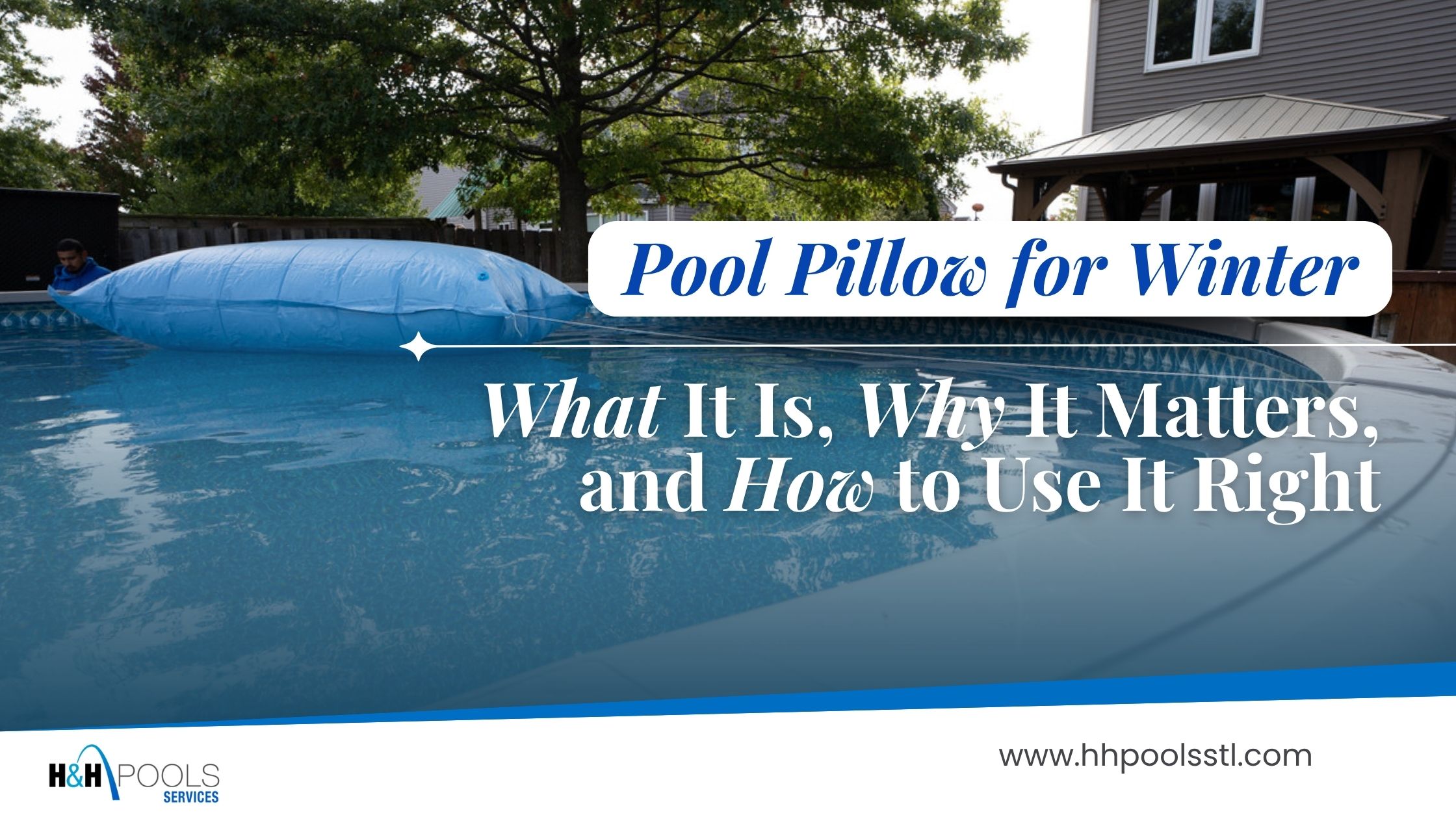
Pool pillow for winter placed in an above ground pool to prevent ice damage and protect the pool cover.

What Is a Pool Pillow and Why You Need One

For full winter preparation tips, see our Pool Closing Step-by-Step Winterization Guide.

A pool pillow is an inflatable cushion that floats in the center of your pool during the winter season. Its main job is to protect your pool walls, liner, and cover from the pressure caused by ice and snow. It might seem like a small accessory, but it plays a big role in preventing damage and saving you money on repairs when spring comes around.

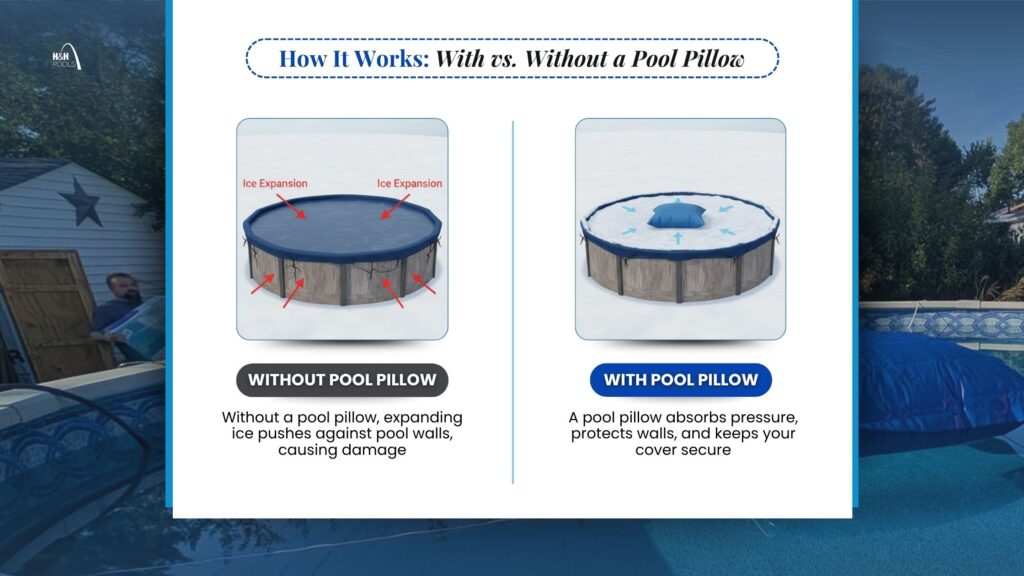
When water freezes, it expands. Without a pool pillow for winter, that expansion pushes outward against your pool walls, which can lead to cracks, stretched liners, or bent frames. The pool pillow takes on this pressure by allowing ice to expand inward, creating a flexible cushion that keeps your pool structure safe.

If you have an above ground pool, using a pool pillow is essential. It protects your walls from buckling under ice pressure. For inground pools, it’s still beneficial because it helps your winter cover stay tight, prevents sagging, and improves water drainage.

How Does a Pool Pillow Work

Think of a pool cover pillow as your pool’s shock absorber. When the water freezes and expands, the pillow compresses slightly and redirects that pressure toward the center instead of the pool walls. This simple process keeps your liner, walls, and frame from taking the brunt of winter stress.

A pool pillow does more than just handle ice — it also provides several practical benefits throughout the season:
A winter pool cover can dip in the middle under the weight of snow and rain. The pool pillow raises the center, allowing water to drain toward the edges instead of pooling on top. This helps your cover stay firm, clean, and long-lasting.

By keeping the cover elevated, the pillow helps leaves, twigs, and other debris slide off more easily. You’ll spend less time cleaning your cover and more time enjoying a smoother spring opening.

Constant pressure and heavy snow can shorten the lifespan of your pool materials. With a pool pillow for winter, you reduce strain and prevent early wear and tear.

Comparison of above-ground pools with and without a pool pillow, showing how a pool pillow prevents ice expansion and wall damage in winter.

These small benefits add up to big savings and peace of mind during the colder months.

How to Choose the Right Pool Pillow Size

For more basic maintenance advice, visit our Pool Care St. Louis Guide.

The right pool pillow size depends on the shape and size of your pool. Choosing properly ensures the pillow can balance pressure evenly across the surface and keep your cover stable.

Here’s what to use for different pool sizes:
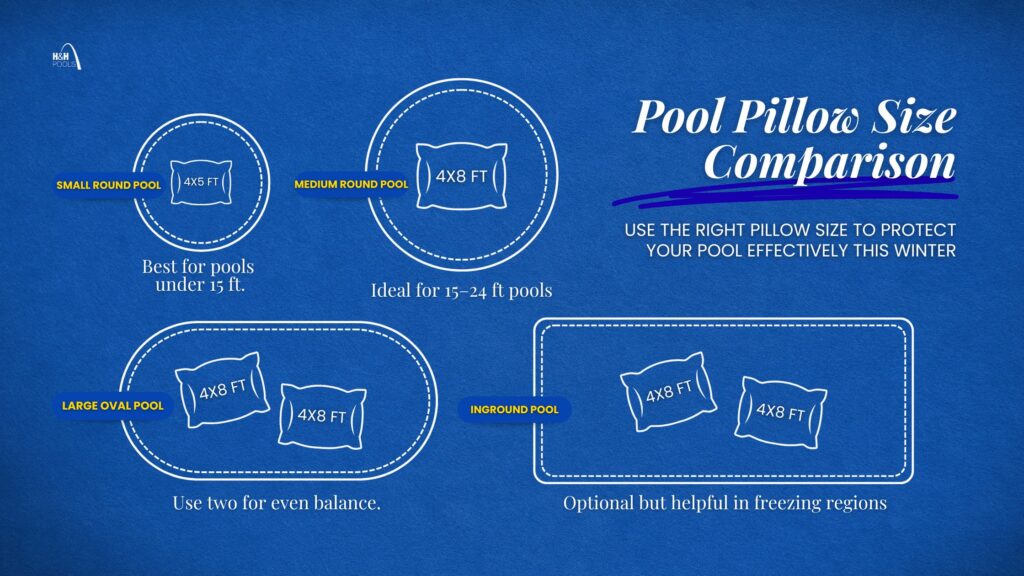
Pool pillow size comparison chart showing recommended sizes for small, medium, large, and inground pools for winter protection.

Use a 4 ft × 5 ft pillow. One pillow is usually enough to relieve pressure and prevent ice damage.

Choose a 4 ft × 8 ft pillow. This size is perfect for standard above-ground pools and gives enough coverage for snow and ice protection.

Use two 4 ft × 8 ft pillows or one 4 ft × 15 ft pillow. Two smaller pillows are easier to position and provide better support.

You can use one or two 4 ft × 8 ft pillows. While optional, they help in regions with frequent freezing temperatures and heavy snowfall.

Pro Tips:

  • Inflate your pillow only 60–80% full. This allows room for compression and prevents the pillow from popping as temperatures change.
  • If your pool is large, use two or more pool pillows to evenly distribute pressure.
  • Always center the pillow before adding your winter cover to maintain balance and protection.

Step-by-Step: How to Install a Pool Pillow for Winter

Use a shop vac or air pump to fill your pillow to about three-quarters full. Overinflating can make it stiff and prone to popping when temperatures fluctuate.

Most pool pillows come with grommets or attachment points. Use rope or cord to tie the pillow to opposite sides of your pool to keep it centered during installation.

Pull your winter cover gently over the pool and pillow. Smooth out wrinkles to make sure the pillow stays in the middle and the cover sits evenly. Tighten the cable or clips around the pool’s edge to keep it secure.

After strong winds, snowfalls, or temperature drops, check to make sure your pillow hasn’t shifted or deflated. Remove heavy snow buildup with a soft broom or pool cover pump.

Tip: For large or oval pools, two smaller pillows are better than one oversized one. They’re easier to manage and provide more balanced protection.

Benefits of Using a Pool Pillow in Winter

Adding a winter pool pillow is one of the easiest ways to protect your investment and simplify your maintenance routine. Here’s how it helps:

Without a pool pillow, expanding ice can push against your pool walls and cause cracks or warping. The pillow takes on this stress and prevents damage before it starts.

A sagging or loose cover can let debris and water collect on top. The pillow lifts the center so the cover stays elevated and stable all season long.

Snow and rain naturally flow toward the pool’s edges where you can easily remove the water. This prevents weight buildup in the center.

Because debris slides off the cover instead of getting trapped, reopening your pool in spring is faster and easier.

Reducing pressure and preventing freeze damage helps your walls, liner, and cover last longer, saving you money in the long term.

Common Pool Pillow Mistakes

If you encounter winter pool damage, explore our Winter Pool Repairs in St. Louis page for expert solutions. (and How to Avoid Them)

Even small mistakes can keep your pool pillow for winter from working properly. Here’s what to watch for:

When fully inflated, the pillow can burst as temperatures change. Always inflate it to about 60–80%.

 This causes uneven pressure. Instead, use two or more pillows for balance.

If you skip tying it down, it may drift off-center and lose its effectiveness. Tie it to opposite sides of the pool using cords.

Heavy snow, ice, or leaves can stress your pool cover. Clear them after storms to prevent damage.

Inspect your setup after extreme weather. Catching a problem early prevents cover sagging or leaks.

How to Store Your Pool Pillow After Winter

When the cold season ends, proper storage will help your winterizing pool pillow last for years:

Remove dirt and residue so it doesn’t cause cracks during storage.

Moisture can lead to mildew or weaken the vinyl. Let it air dry fully before storing.

Open the valve and let air out gently to avoid damaging the seams.

Rolling prevents sharp creases that can lead to cracks.

Keep it away from sunlight or heat sources that can damage the material.


With these simple steps, your pool pillow can last up to three winters before needing replacement.

Ready to Cover Your Above Ground Pool for Winter?

Learning how to cover above ground pool for winter is not difficult. It is all about taking simple steps consistently. A secure, well-fitted winter pool cover protects your pool, prevents damage, and makes reopening next spring quick and easy.

When the warm weather returns, follow our Complete Guide to Opening a Pool After Winter to get your pool ready for another great season. Taking the time now to prepare means you will spend less time fixing problems later and more time enjoying your backyard oasis.

For professional help or seasonal maintenance, schedule your pool closing or inspection with H&H Pools before the next cold front hits. Your pool will be protected, safe, and waiting for sunny days ahead.

Preparing Your Pool for Winter Success

Once your pool pillow is stored, get ready for reopening with our Spring Pool Opening Checklist.

A pool pillow for winter might seem like a small accessory, but it offers huge benefits for pool protection. It absorbs pressure from ice, improves drainage, and prevents cover damage — all of which make reopening in spring much easier.

Whether you have an above ground pool or an inground pool, adding a pool pillow is an affordable way to protect your investment.

If you’re in the St. Louis area, H&H Pools can help you choose and install the right pool pillows and winter covers for your setup.


Frequently Asked Questions

A pool pillow for winter helps protect your pool by absorbing pressure from ice and snow. It keeps the water and cover balanced and prevents damage to your liner and walls. Without one, expanding ice can put too much force on the pool structure.

A water pillow, also known as a pool air pillow, keeps ice from pressing outward on your pool. It also helps snow and rainwater drain toward the pool’s edges, making it easier to clean your cover throughout winter.

The best thing to place under your above ground pool cover is a winter pool pillow. It provides a central support point, keeps your cover stable, and reduces stress on your pool walls during freezing conditions.

Yes. While not always required, a pool pillow for inground pools is a great idea in colder climates. It helps reduce ice expansion, supports your cover, and keeps melting snow and rain draining properly.

The number of pillows depends on your pool’s size. Smaller pools need just one, while larger or oval-shaped pools should use two or more pool pillows for winter to balance pressure and maintain even coverage.

Most pillows come with built-in grommets or ties. Use cords to secure the pillow across the pool before adding your cover. Keep the cords snug but not tight so the pillow can move slightly as water freezes and thaws.

You can, but it’s not recommended. Without a pool cover pillow, expanding ice can push outward, damaging your liner and walls. Using one prevents costly repairs and makes your pool safer through winter.