Does Your Winter Pool Cover Need Repair or Replacement?
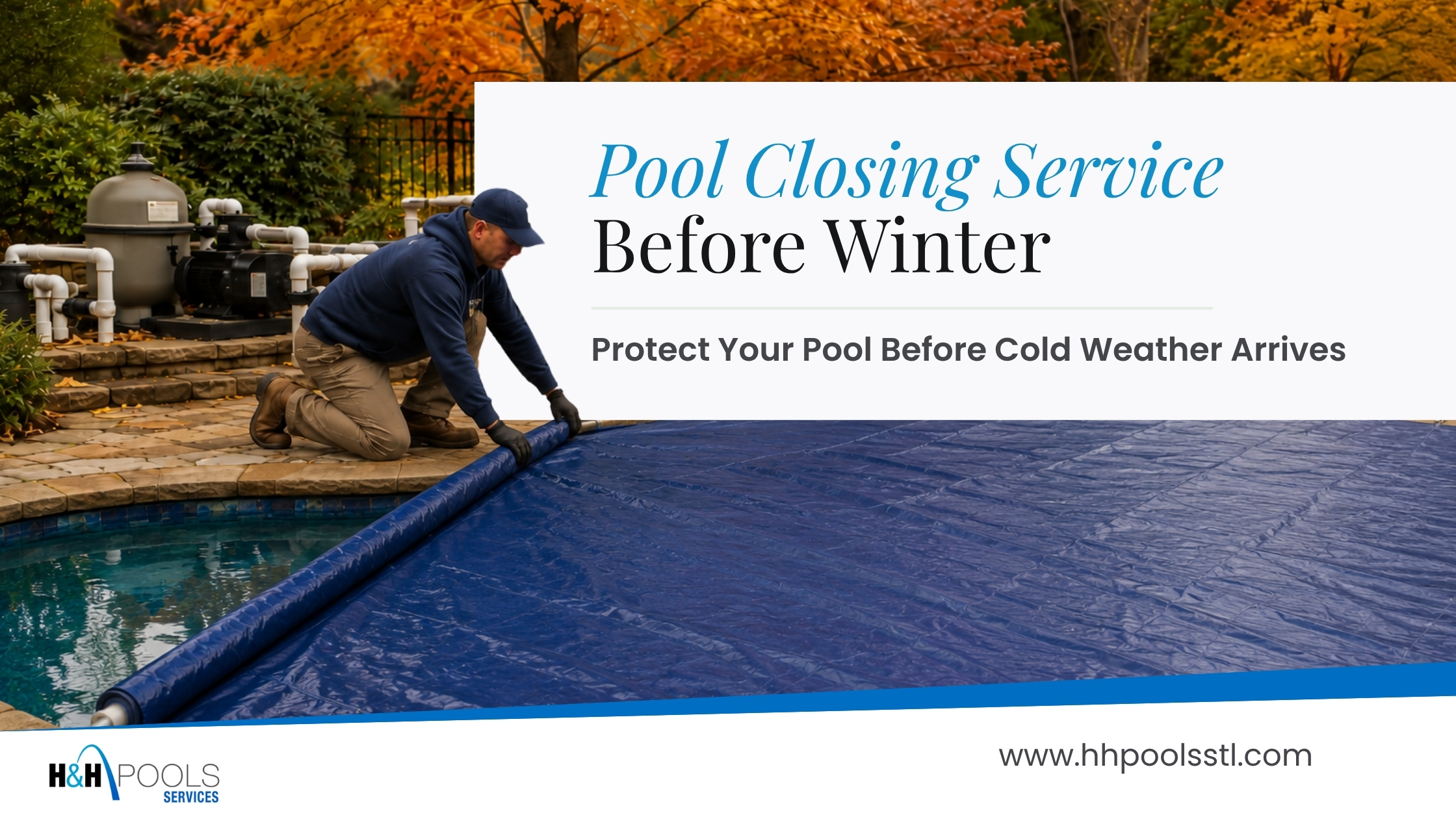
Winter pool cover protection matters before cold weather arrives because the cover helps keep leaves, dirt, rain, and other debris out of your pool while it is not being used. If your cover has tears, loose areas, or a poor fit, fix it before winter. This will help protect your pool during colder months.
For St. Louis homeowners, fall is a good time to inspect the cover before temperatures drop. Even a good cover can wear down from weather, storage, and regular use. Checking it early gives you time to decide whether pool cover repair is enough or whether pool cover replacement makes more sense. Regular pool maintenance in St. Louis can also help identify problems before the pool is prepared for winter.
Why Does a Winter Pool Cover Matter?
A winter pool cover helps protect your pool during the months when swimming has stopped.
Throughout fall and winter, your pool may be exposed to leaves, rain, wind, snow, ice, and changing temperatures. A cover in good condition can keep much of that debris out and make spring cleanup easier.
The EPA also explains that using a pool cover can reduce evaporation, cleaning needs, and chemical use.
Before using your cover again, check for:
Pool renovation becomes more important during summer because pools are being used more often.
Kids are swimming daily, families are hosting pool parties, and hot weather can put extra pressure on pool equipment and surfaces. Problems that seemed small earlier in the season can quickly become harder to ignore.
Common summer pool problems include:
Finding these problems early gives you time to address them before winter weather arrives.
How Do You Know if a Pool Safety Cover Is Still Good?
Inspect your pool safety cover before every winter, even if it looks fine.
Walk around the entire cover and look closely at the areas that receive the most wear. Check previous repair areas closely. Also check the straps, edges, and stretched areas.
The Pool & Hot Tub Alliance provides additional winter pool cover guidance, including the importance of checking covers and removing debris during winter.
If the cover has several weak areas or no longer stays securely in place, it may be time to consider repair or replacement.
Do not reuse a safety cover just because it worked last season. Its condition can change after months of weather exposure and storage.
When Does Pool Cover Repair Make Sense?
Pool cover repair can work well for small areas of damage. The rest of the cover should still be in good condition.
For example, one small tear does not always mean you need a new cover.If the cover still fits properly and most of the material is strong, repairing the damaged area may extend its useful life.
However, do not ignore small damage. Winter weather can place more stress on an already weakened area and make the problem worse.
If you notice damage around the pool as well as the cover, H&H Pools offers pool repair in St. Louis for cracks, worn surfaces, equipment concerns, and other repair needs.
When Is Pool Cover Replacement Better?
Pool cover replacement may be the better option when damage is widespread or the cover no longer fits the pool correctly.
Several problems can mean your cover is wearing out. Look for tears, stretched areas, loose sections, and repeated repairs.
Replace a badly worn cover before winter. This can help keep leaves, snow, rain, and other debris out.
Repeated repairs may also become less practical over time. If new damage continues appearing each season, replacement may provide better long-term protection.
Why Does the Fit of Your Pool Cover Matter?
A winter pool cover needs to fit properly to protect the pool effectively.
A loose cover may let leaves, dirt, and other debris enter the water.Loose sections may also be more likely to move during strong winds or storms.
Before winter, walk around the pool and check whether the cover sits evenly. Look for gaps, loose areas, or sections that do not appear secure.
If something does not look right, address the problem before colder weather arrives rather than hoping the cover will stay in place all winter.
When Should You Schedule Pool Cover Installation?
You may need pool cover installation after buying or replacing a cover. Professional help can also make sure it fits correctly.
Fall is a good time to handle installation because it gives you time to make sure everything fits before winter weather begins.
Professional installation can also help after a pool renovation. It can help when the pool area changes or the cover no longer fits.
If your pool has recently been updated or needs larger improvements, you can also explore H&H Pools' pool renovation and remodeling services.
Waiting until freezing temperatures arrive can make installation more difficult and leave less time to correct problems.
What Makes a Good Pool Cover for Winter?
Choosing the right pool cover for winter depends on your pool and the level of protection you need.
A winter cover should fit correctly, remain secure, and be in good enough condition to stay in place throughout the off-season.
Before using any cover for winter, make sure there are no serious tears, weak areas, or fitting problems.
The Pool & Hot Tub Alliance recommends following the cover manufacturer's instructions and regularly checking winter covers as part of proper pool cover care and safety.
A cover that worked during the swimming season may not always provide the same protection needed during months of colder weather and heavy debris.
Can You Keep Using a Cover With a Small Tear?
A small tear does not always mean immediate replacement is necessary, but it should never be ignored.
Check the size and location of the tear. Then check the surrounding material and the cover's fit.
A small damaged area can grow larger once winter weather puts more stress on the material.
If the rest of the cover is strong, repair may be possible. If several areas are already showing wear, replacement may make more sense.
What Should You Check Before Covering the Pool?
Before installing your winter pool cover, take a few minutes to inspect both the cover and the pool.
Prepare your pool for colder months. Make sure the cover is clean, secure, and free from serious damage.
Check previously repaired areas carefully because these sections may show wear sooner than the rest of the cover.
You should also look around the pool for water loss, cracks, equipment problems, or other concerns that would be better addressed before everything is covered.
Should Pool Problems Be Repaired Before Installing the Cover?
If your pool already has a known problem, covering it and waiting until spring may allow the issue to become worse.
Check water loss, damaged equipment, cracks, and other problems before winter.
If you notice the water level dropping faster than expected, professional pool leak detection can help identify whether a leak is affecting the pool or its equipment.
Fall gives homeowners time to deal with these concerns without the rush that often comes with spring pool opening.
Taking care of necessary repairs now can make reopening the pool easier when warmer weather returns.
Why Is Fall the Best Time to Check Your Cover?
Fall gives St. Louis homeowners a useful period between the end of regular swimming and the arrival of freezing temperatures.
This makes it a good time to inspect your winter pool cover, schedule repairs, arrange replacement, or complete pool cover installation.
Planning early gives you time to fix other pool problems before winter. You will not discover them after covering the pool.
The goal is to enter winter knowing the pool and cover are both ready for the months ahead.
How Can You Help Your Pool Cover Last Longer?
Regular care can help your pool cover stay in better condition from season to season.
Inspect it before every winter, keep it clean when possible, repair minor damage early, and store it properly when it is not being used.
It is also important to make sure the cover fits correctly instead of forcing a stretched or damaged cover back into place.
A short inspection each fall can help you catch problems while they are still easier to manage.
Should You Repair or Replace Your Winter Pool Cover?
Whether you need pool cover repair or pool cover replacement depends on the overall condition of the cover.
You may be able to repair one small damaged area on an otherwise strong cover.However, several tears, repeated repairs, weak material, or a poor fit may mean replacement is the better choice.
The goal should not simply be to make the cover last one more season. It should be to make sure your pool has dependable protection throughout winter.
If you are unsure which option makes sense, a pool professional can inspect the cover and help you compare your choices.
When Should You Call a Pool Professional?
Call a pool professional if you cannot judge the damage. Also get help if the cover fits poorly or has several worn areas.
You may also need help installing a new cover. A professional can also check other pool problems before winter.
H&H Pools offers a full range of pool services for St. Louis homeowners who need help with maintenance, repairs, leak concerns, or seasonal pool preparation.
Having these concerns checked during fall gives you time to make repairs before colder St. Louis weather arrives.