Can Pool Pump Repair Fix Cloudy Pool Water?
Pool closing chemicals help prepare your swimming pool water for the months when the pool will not be used. They can help control algae, protect water quality, and make spring opening easier when they are used with proper cleaning, balanced water, equipment preparation, and a secure pool cover.
For St. Louis homeowners, September is a good time to start preparing for the end of swimming season. Waiting until freezing weather arrives can make pool closing more stressful and leave less time to fix water or equipment problems.
Knowing what products your pool needs and when to use them can help you avoid cloudy or green water when spring arrives.
Why Are Pool Closing Chemicals Important Before Winter?
Pool closing chemicals help keep pool water in better condition while the pool sits unused during fall and winter.
Even when nobody is swimming, the water can still be affected by dirt, changing temperatures, leaves, and algae. Since homeowners usually check a closed pool less often, small water problems can go unnoticed for months.
Using the right closing products can help:
However, chemicals are only one part of closing a pool.
If the water is already green or cloudy, or the pool has equipment problems, adding chemicals and covering it will not fix those issues. Start with a clean pool and address existing problems before closing.
Which Pool Closing Chemicals Are Commonly Used?
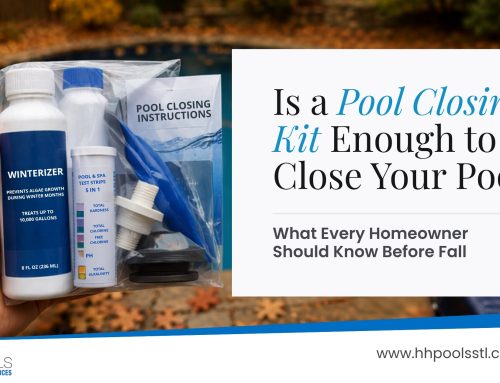
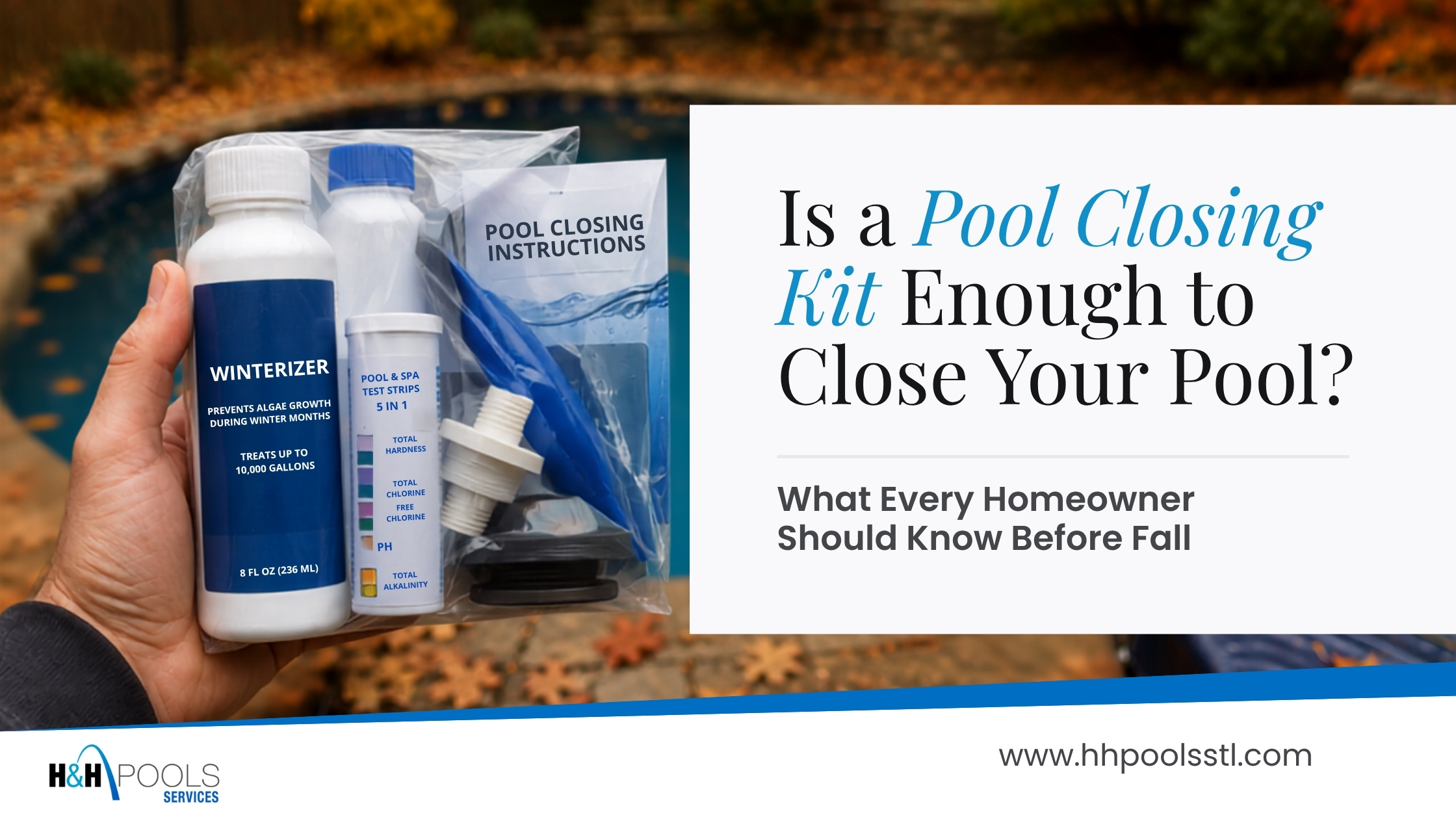
The products needed before winter depend on the pool’s size, condition, and water quality. Some homeowners use a pool closing kit, while others purchase each product separately.
Pool Shock or Chlorine
Pool shock or chlorine is commonly used before closing to help clean the water and reduce unwanted growth.
The goal is to close the pool with clean water rather than leaving dirt or algae in the water for several months.
Algae Prevention
An algae-prevention product can help reduce the chance of green water while the pool is covered.
This is especially helpful because algae that grows during the off-season can make spring opening much more difficult.
Water Balance Products
Before closing, homeowners should make sure the water is properly balanced.
Good pool water balance helps protect the pool surface and equipment while also creating better conditions for the water during winter.
Other Winter Products
Some pool closing kits include additional products designed to help keep water cleaner during the off-season.
Always follow the directions on the product you are using. Adding more than the recommended amount does not necessarily provide better protection.
Why Does Pool Water Balance Matter Before Closing?
Proper pool water balance is an important step before adding winter chemicals. The CDC’s pool water testing guidance provides additional information about testing chlorine and pH levels in residential pools.
If the water is badly out of balance when the pool is closed, homeowners may find stains, algae, cloudy water, rough surfaces, or other problems when spring arrives.
Before closing the pool:
The goal is to avoid covering a pool that already has a water problem.
Taking care of the water before winter can save time and frustration when the pool is reopened. Regular pool maintenance in St. Louis can also help homeowners identify water and equipment concerns before closing.
What Are Pool Winterizing Chemicals?
Pool winterizing chemicals are products used to help prepare pool water for the off-season.
They support the closing process, but they do not replace cleaning, maintenance, equipment preparation, or a winter cover.
A simple way to think about pool winter preparation is:
These steps work together.
Simply adding winterizing chemicals to a dirty pool and covering it can leave homeowners with a much larger cleanup in spring.
How Do You Winterize a Pool Before Adding Chemicals?
Homeowners researching how to winterize a pool should begin with cleaning and inspecting the pool before adding winter products.
In older pools, recurring water problems may also be a sign that it is time to consider pool renovation and remodeling options.
Remove Leaves and Debris
Remove leaves, dirt, insects, and other debris from the water. Debris left in the pool all winter can stain surfaces and make spring cleanup harder.
Clean the Pool
Brush and clean the pool so dirt does not sit on the surfaces for several months.
Starting with a clean pool gives your closing products a better chance to work properly.
Test the Water
Check the water before closing.
If the water is cloudy or green, address the problem first instead of simply covering it.
Check Pool Equipment
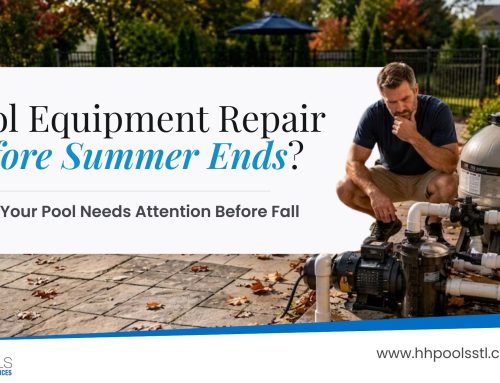
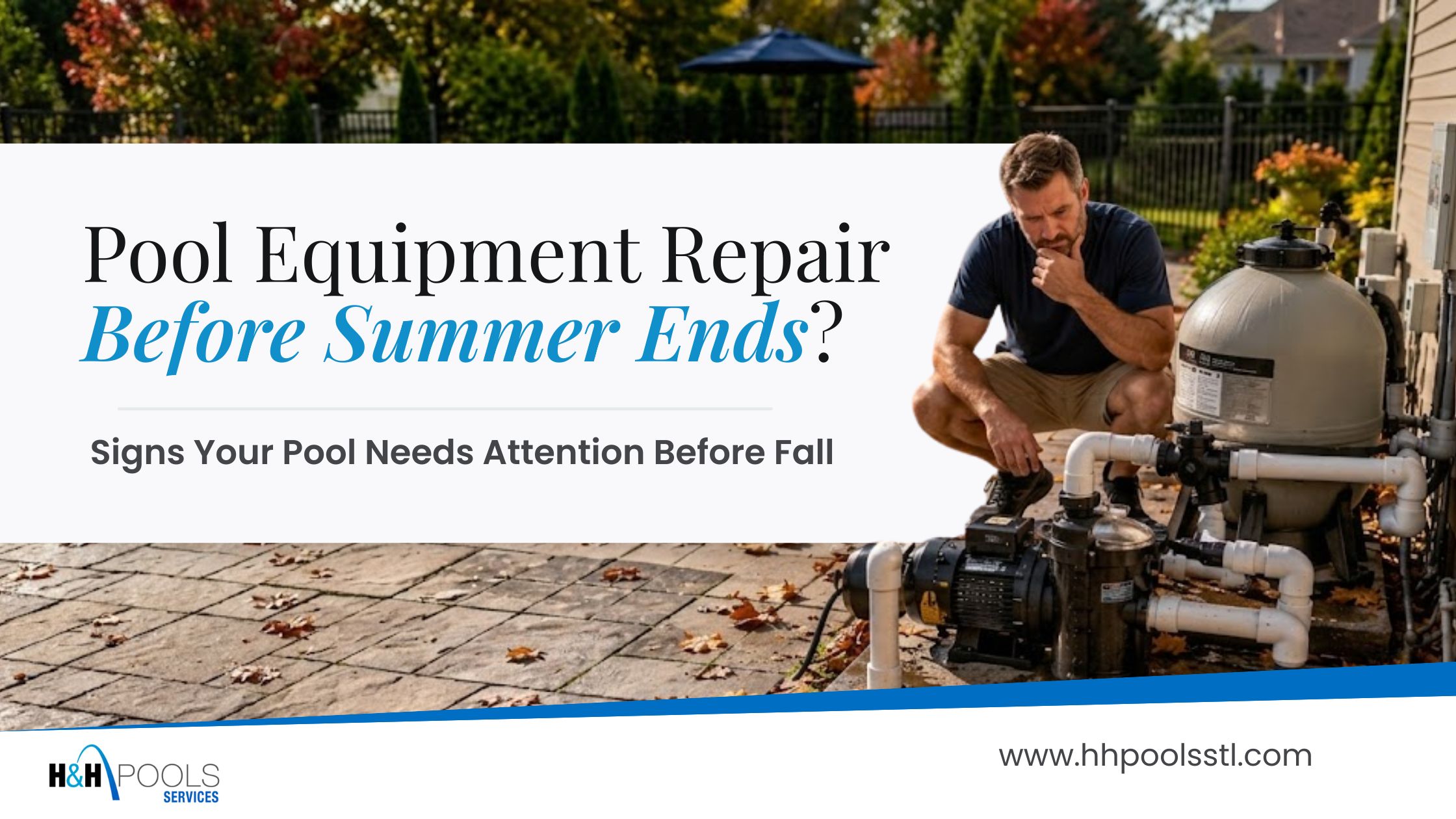
Look for obvious problems with the pump, filter, heater, or other equipment.
If something is already failing, it is better to identify it before the pool is closed for winter. Homeowners who notice equipment or pool damage can explore H&H Pools’ pool repair services in St. Louis before colder weather arrives.
Add the Recommended Products
Once the pool is clean and the water is ready, add your closing products according to the manufacturer’s instructions.
Complete the Closing Process
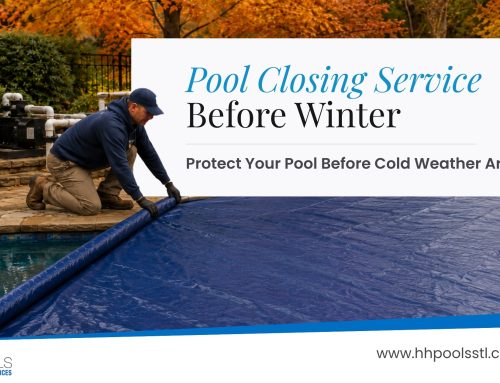
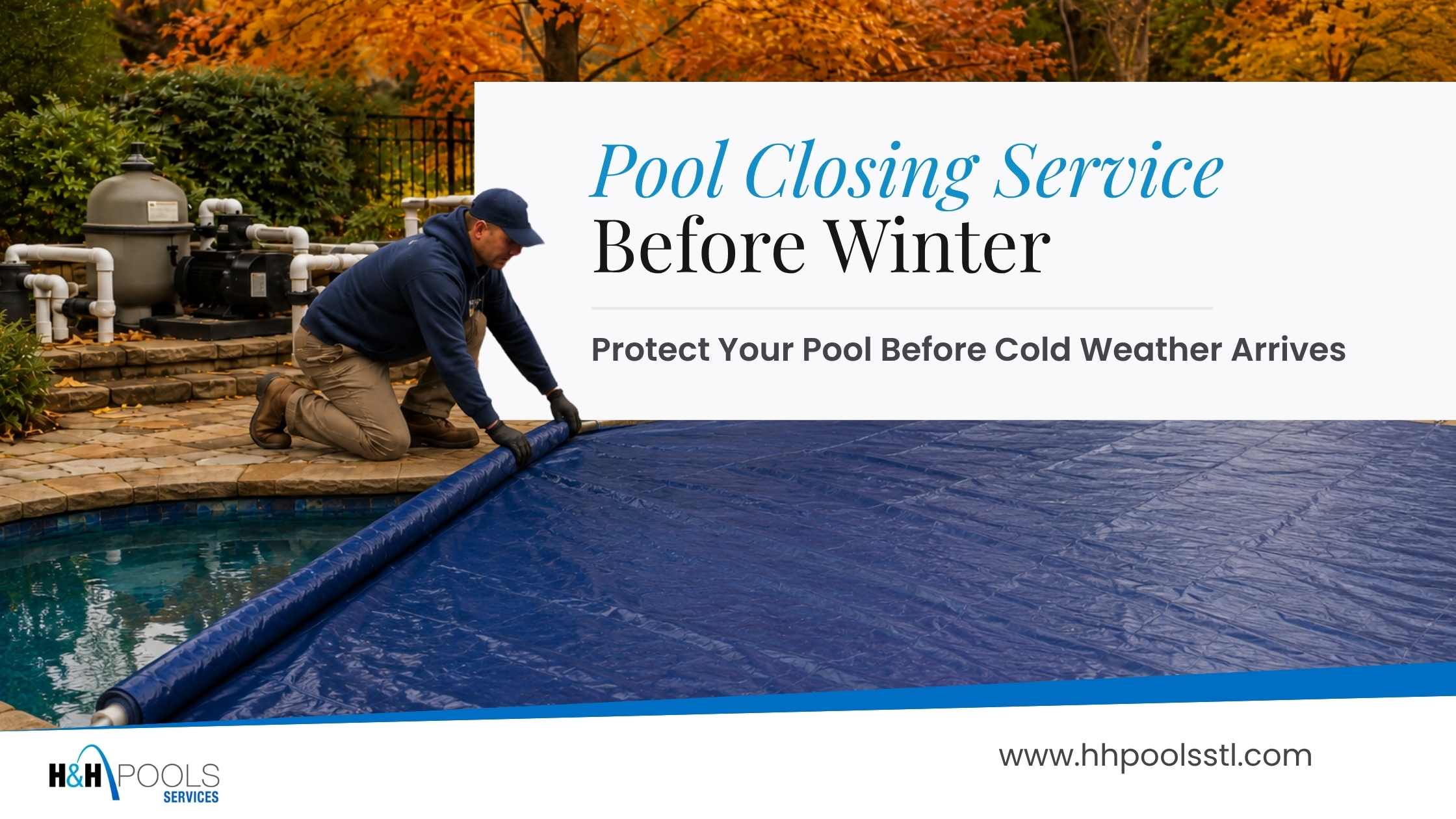
Finish preparing the pool and equipment, then secure the winter cover.
Learning how to winterize a pool involves much more than adding chemicals. The entire pool needs to be prepared for months of little or no use.
How Do You Close a Pool for Winter?
Homeowners searching for how to close a pool for winter should think of pool closing as a complete process rather than a single step.
A typical closing may include:
Each step serves a different purpose.
The chemicals help care for the water, while cleaning removes debris. Meanwhile, equipment preparation helps reduce the risk of freeze damage, and the cover helps keep new debris from entering the pool.
Because St. Louis winters can bring freezing temperatures, equipment preparation is especially important. Water trapped inside certain pool parts can freeze, expand, and cause damage.
If you are unsure how to close a pool for winter correctly, professional help may be worth considering.
What Happens If You Use Too Much or Too Little?
Pool closing products should always be used according to their directions. Homeowners should also follow the CDC’s pool chemical safety recommendations when handling, measuring, and storing pool products.
Adding extra chemicals does not mean your pool will receive extra protection. Using too much or too little can make the water harder to manage and may create other problems.
Common mistakes include:
Give yourself enough time to prepare the pool instead of rushing through the process.
A little extra care in September can prevent a much larger cleanup in spring.
How Can Winter Pool Maintenance Protect Your Pool?
Winter pool maintenance helps homeowners keep an eye on the pool after it has been closed.
Closing the pool does not mean it should be ignored until spring. Occasional checks can help catch small issues before they become larger problems.
During winter, homeowners can:
For example, a loose cover can allow large amounts of leaves and debris into the water. Likewise, a noticeable drop in water level may indicate a problem that should be inspected.
Winter pool maintenance does not need to be difficult. A quick check from time to time can make a big difference. Homeowners can also review these pool care tips for St. Louis for more information about regular water and pool care.
Can Pool Closing Chemicals Prevent Algae All Winter?
Pool closing products can help reduce algae growth, but they cannot guarantee completely algae-free water.
The condition of the pool before closing matters just as much as the products being used.
Algae is more likely to develop when:
For better results, close a clean and balanced pool and use the correct winter products.
Starting with better water gives you a better chance of opening to clearer water in spring.
Should You Close a Pool If the Water Is Cloudy?
Pool closing chemicals should not be used to hide an existing cloudy-water problem.
If the pool is cloudy, determine the cause before closing it.
Cloudy water may be caused by:
Covering cloudy water can make the problem harder to correct in spring.
Instead, clear the water first and then complete the closing process. Starting winter with clean water can make reopening much easier. H&H Pools also provides additional pool maintenance tips and seasonal pool guides for St. Louis homeowners.
When Should You Add Pool Closing Chemicals?
Pool closing chemicals should be added after the pool is cleaned and the water is properly balanced. For St. Louis homeowners, September is often a good time to start preparing as swimming slows down and cooler weather approaches.
Before adding closing products, make sure the pool is clean, the water is balanced, and any repair needs are addressed. Planning early gives you time to handle problems before winter.
Are Pool Closing Chemicals Enough Without a Winter Cover?
Pool closing chemicals cannot replace a proper winter cover. A secure cover helps keep leaves and debris out, reduces spring cleanup, and protects the pool throughout the off-season.
The EPA’s pool water efficiency guidance also explains how pool covers can reduce evaporation and the need for additional pool chemicals.
Using the right closing chemicals together with a secure cover provides better protection throughout winter.
When Should You Consider Professional Pool Closing Help?
Professional help may be useful if your pool has cloudy or green water, equipment problems, water loss, or you are unsure which closing products to use.
A professional can check the water, equipment, and overall condition of the pool before winter. H&H Pools’ professional pool maintenance services can also help homeowners address maintenance concerns before the pool remains covered for several months.